We weave tales, preserve identity, cherish nature. Balancing cultural richness with environmental responsibility
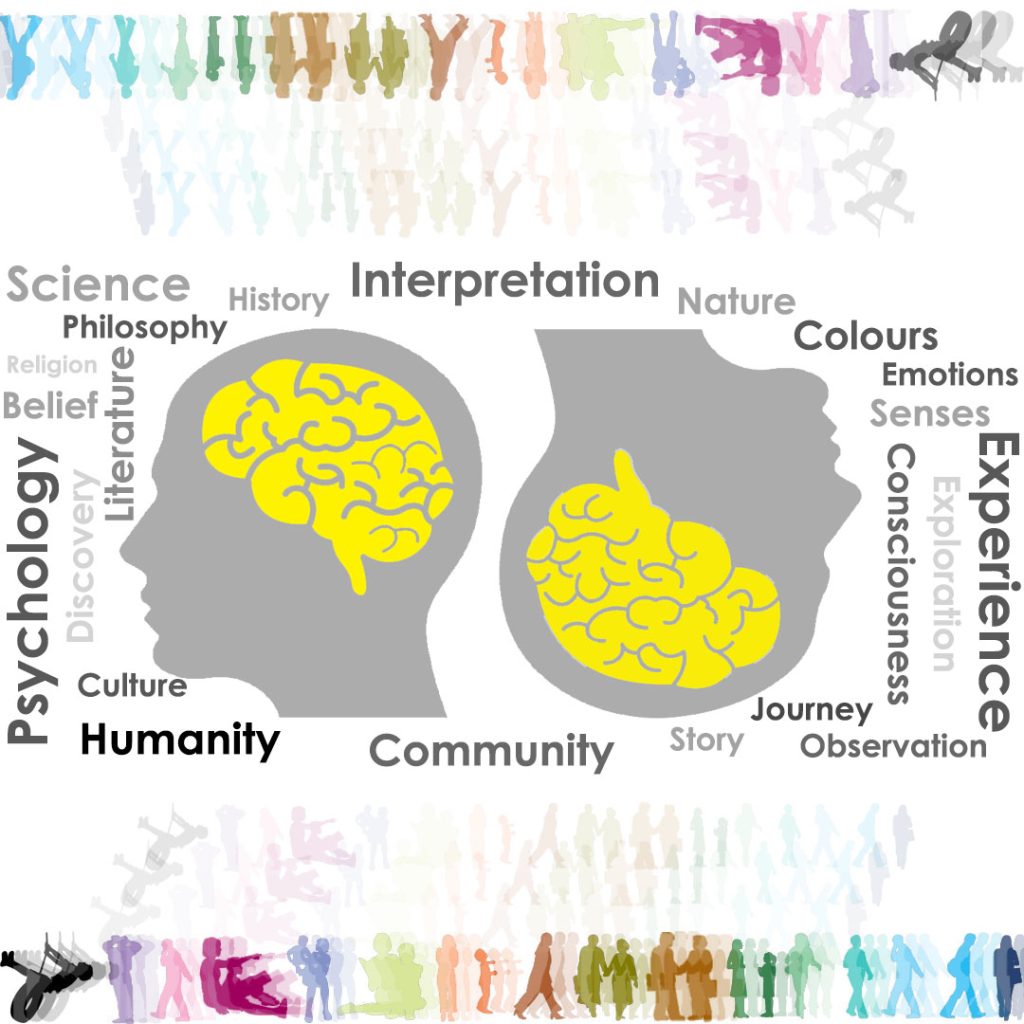
Humans are the most intricate entities which compel us to be unique and chaotic. When I was studying architecture I used to observe whatever was around me and primarily visualize how we talk, the movements of people, the experience of closed and open space, and places that make me feel alive. There is precisely something unusual about some places which makes us suspect a sense of belonging. The inquiry which commenced a few years back is still in the improvement stage and every day I am discovering new things about humans and our dear mind which anticipates the surroundings and how our behavior has differed.
Human-centric places can be the future of mankind
What is a human-centric place?
For me, it is a territory of belonging,
Where I can feel myself the vastly and the surroundings help me to sense it,
Dwelling is mother nature,
The surfaces of soil,
The notions from the windows,
Under the dark sky, the place for everyone to greet and laugh concurrently,
An idea of having a real moment in life,
A sense of belonging.
I always think that technology has given us information and bound us globally but it has also split us from our minds and visions. We just see things, avoid the details, and purposes, and ask even stupid questions. We just pursue the information or idea of someone else losing our own identity. I believe designers should be recognized for their work which makes one feel at home. So I think it is essential for young minds to feel livable and architects are the creators who can design such experiences in the built form.
“Architecture can’t force people to connect, it can only plan the crossing points, remove barriers, and make the meeting places useful and attractive.” Denise Scott brown
Environment and our behavior
When was the last time you ran in the forest or sat near the river or slept under the night sky?
Surroundings consist of mother nature and our constructed nature. We are influenced by our surroundings and our outcomes are based on them. Natural things such as trees, plants, animals, water, mountains, and the sky are essential for making us feel and believe in the solitude of space. We respond to natural elements in a very encouraging way, caressing freer with freedom. But now our cities have become concrete jungles where everyone is involved with their electronic devices and inhabiting life in pressure and depression. I think as an architect we went wrong in generating such monotonous buildings and ignoring landscape resulting in absence of human-centric places. We are part of climate and similarly, we calmly respond to nature.
Architecture for me was invariably about adjoining this space, the spatial arrangement of inside and outside environment, exploration of far and near spaces, and the connection of up and down surfaces. As soon as I started formulating that notion in my designs the diagram became alive. I can visualize the court where people will have chai together, corners where one can read silently and appreciate the environment around us. I was inspired by Leonardo Vinci largely and his passion for discovering the unknown. He was curious about everything around him and his room of interest widely varied from innovation, painting, sculpting, architecture, science, music, mathematics, and engineering to literature, anatomy, geology, astronomy, botany, writing, history, and cartography.
Leonardo wrote: “Man has been called by the ancients a lesser world, and indeed the name is well applied; because, as man is composed of earth, water, air, and fire…this body of the earth is similar.” He compared the human skeleton to rocks (“supports of the earth”) and the expansion of the lungs in breathing to the ebb and flow of the oceans. he considered his eyes to be his main avenue to knowledge; to Leonardo, the sight was man’s highest sense because it alone conveyed the facts of experience immediately, correctly, and with certainty.
Architectural journey through senses
Humans are distinct and that formulates a wonder to dig in and find out our uniqueness. We are all fringed by our context. So when we discuss humans we imply the interconnected culture, beliefs, ideas, crafts, art, music, mythology, etc which mold us. Our dreams, memories, and fantasies are another trait that makes us unusual as an individual. We see through our eyes but we also see through our brain which is called imagination. It is significant to review this behavior and personality which benefits us to build spaces for people. I have a keen concern for understanding our behaviors and personalities and formulating that idea in my works. Our buildings should be our tales which are composed of human experiences and wisdom from history.
History is important to understand, how we unfold not only biologically but also psychologically which gives us an understanding of our background. We are anecdotes of culture-bound to create a social structure in a society. Societies are a myth of our crafts, art, literature, the mythology that shapes our mind and our ideology in a particular context. Formulating our behavior and personalities is one of the aspects of designing spaces. The understanding of art, science, engineering, and design are the ingredients of architecture. The exploration and invention of user-friendly spaces can shape our cities and eventually cities shape us.
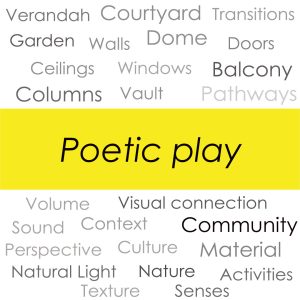
What is a poetic play?
“Every touching experience of the architecture is multi-sensory, qualities of space, scale and matter are measured equally by eyes, nose, ears, skin, tongue, skeleton, muscle. Architecture strengthens the existential experience, one; a sense of being in the world, and this is strengthened by the experience of self. Instead of mere vision, or the classical senses, architecture involves several realms of sensory experience which interact and fuse.” – Juhani Pallasama
“It’s a tale which allows living in other people’s lives and experiencing what they might be experiencing and that’s a powerful opportunity to learn from places where we have never been yet.”
“A sense of place”
Be a thinker,
Be a dreamer,
Wander around in the streets,
To find the unknown in thyself,
Settle around the shade of trees,
To find the silence in thyself,
Investigate the dynamics of the river,
To find the fragments in thyself,
Ohh !!!! But do our cities have that?
Streets without noise,
Trees and rivers in our concrete jungle,
Sky without pollution,
Somewhere we went wrong in framing the cities,
It is important to preserve and respect our surroundings and respond that in designing spaces otherwise one day the world will lose the meaning of the word “Experience”
Architecture for people is discussed for generations. I had a notion of the perfect world where one hand can help another and all misery, suffering can be wiped out. It can be called the society of compassion. A call for humanity and I guess that can be accomplished through architectural spaces. Well-designed spaces dare to change our perceptions and behavior.Context includes people,social interactions,community engagements,values,beliefs,art,literature while surroundings consists of nature and man-made nature.Senses are majorly governed in forming the experiences of space. I firmly believe architecture to be a tale of an architect-designed for users and inferred in different ways. A story unfolds itself through spatial arrangements, surprising corners, central gathering space, huge textured walls, the eyes perceiving the form, and users experiencing the space through their perception. Sense of a place is not a final output but a process through which the architect interacts with the buildings and later observes the transformation and expansion.
Sarkhej Roza: Silence in Architecture
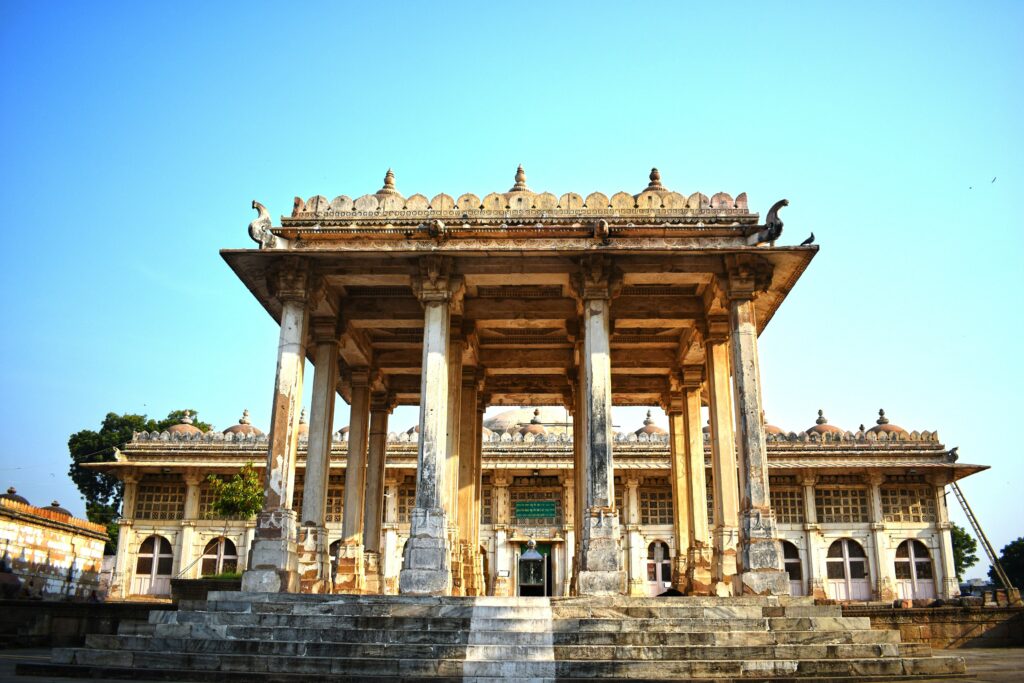
Sarkhej Roza is an architectural monument in Ahmedabad, Gujarat. It’s a masterpiece of Hindi -Ismalic architectural style. The culture, community, art, and literature are blended to form an architectural wonder. It is the composition of the religious and social realm beautifully crafted in palaces, mosques, water tanks, courts, and tombs. The journey of Roza starts in the neighborhood where local people live like a community and share joy and happiness. We enter through a huge stone arch structure into a court where trees shade the space and activities like teaching, and sketching takes place. The architectural features of the Roza are its scale, volume perfectly proportioned to the function of the space. The built-up is designed to understand the climate of Ahmedabad, having a water tank and jaali for diffused light. The play of light is a fascinating element in the Roza. The journey from darkness to lightness involves a play of light through perforated stone jali’s. The central courtyard gives a sense of belonging where people gather and share joy. The water tank is not only an architectural feature but also a hot climate barrier that serves the purpose of cooling effects and views. The long and huge textured stone walls have minimal openings and jharokhas are carved out of stone in the Islamic style. The silhouettes and skyline consist of varied domes composed in a rhythm.
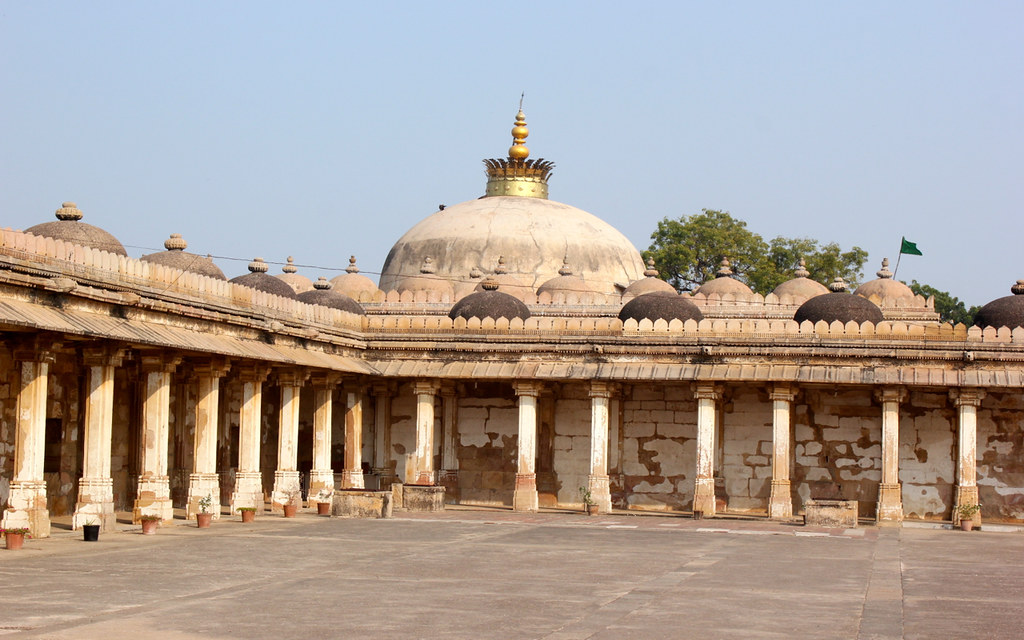
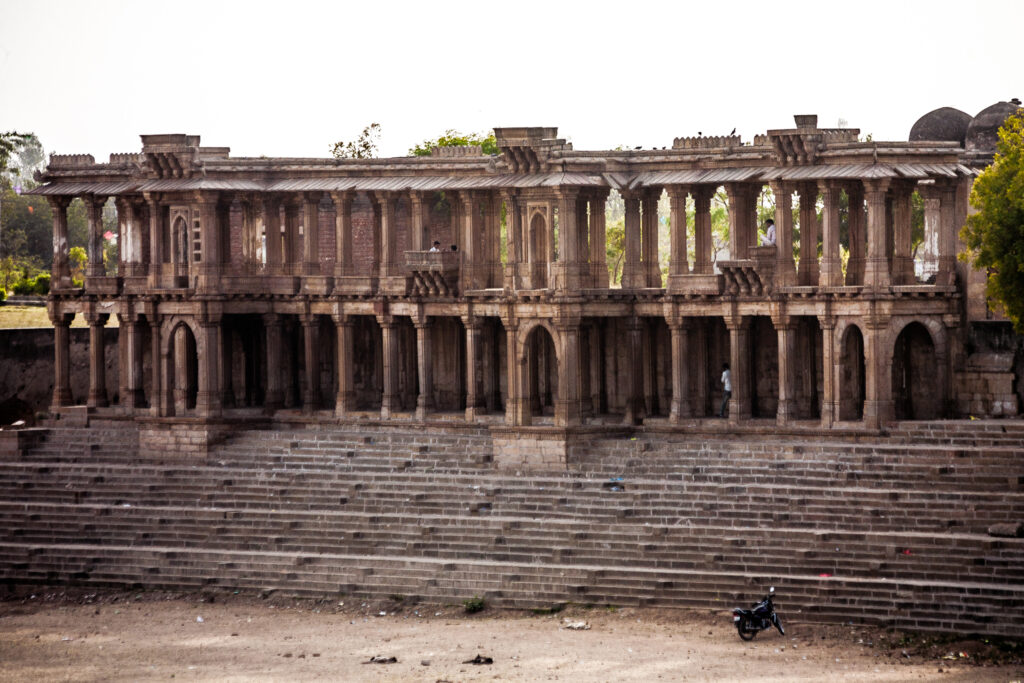
Sarkhej Roza is one of my favorite buildings which has made me curious about how architecture helps to connect community and place resulting in profound experiences. I was an architectural student when I first visited Roza. It was a place that made me realize the importance of our senses and how it affects our behavior. It was an architectural outline designed to create a story through spaces. A place alive after many years made me realize the essence and value of culture and community. Since then I have visited Roza many times and observed the dynamics of spaces in the complex. It is a tale of architectural elements and environmental contextual incorporations beautifully crafted like a painting. The play of light and shadow through stone jaalis, understanding through the touch of the rawness and softness of the stone, exploring the connection between the earth and the sky, and central court for community engagement lead to unknown paths resulting in understanding the values and culture of the community and experience of the spaces. Jali is one of the most important details of the Sarkhej Roza.
Do our roles as an architect and humans different?
Building massive skyscrapers, attempting to catch the sky but we forgot that the substantial grace is to peek at stars and cherish them from the bottom. We are so busy in our lives that we don’t have a moment to pause and understand our surroundings. I have observed that our senses respond contrarily when we are imprisoned by trees and flowers and we feel rejoiced. I am concerned about our future generations who are connected digitally with many people but don’t know the individual living next to them. What we are seeking is little kindness towards people and nature. We need to build a community of compassion where everyone respects nature, and people, and cares genuinely for one another. We are a collection of stories, memories, and experiences sharing our tales and preserving our identity likewise, it is essential to conserve our nature and appreciate our surroundings. It’s time to bring the difference but it should commence with oneself.
“The computer has no capacity for empathy, for compassion. The computer cannot imagine the use of space. But the most important thing is that the computer cannot hesitate. Working between the mind and the hand we often hesitate, and we reveal our answers in our hesitations.” – Juhani Pallasama
Bibliography
https://www.britannica.com/biography/Leonardo-da-Vinci
https://www.thoughtco.com/juhani-pallasmaa-finnish-architect-177421
https://www.sahapedia.org/sarkhej-roza-the-living-monument
http://s3images.coroflot.com/user_files/individual_files/499116_2JTxNIcPuuX5IBptQuwovfQli.pdf
Proudly powered by WordPress